
When I walked into YIVO on the first day of the Irene Kronhill Plekta YIVO Research Fellowship, I was greeted by Stefanie Halpern, Director of the YIVO Archives. She took me and the other members of my cohort into the archives for a special tour. We sifted through floors of documents and stacks of the history of the Jewish people sorted into neat boxes. Stefanie showed us a chilling Nazi portrait painted on the back of a Torah scroll and a booklet of students from a Jewish school. The heartbreaking content contained within YIVO’s archive shows the resiliency of the Jewish people and proved that we were about to embark on important work.
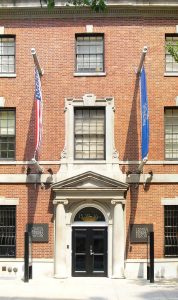
As Fellows, we were assigned to recording the languages and general subject matter of the archival boxes. I was in charge of boxes relating to Jewish and Yiddish language publishers and the Maccabi games. I found documents in Yiddish, Hebrew, Polish, Russian, Ukrainian, French, and Spanish, showing the diverse population of the Jewish community.
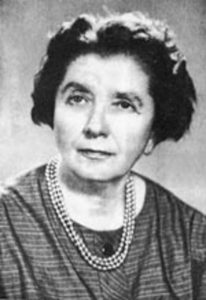
Unfortunately, as the semester made its way into March, COVID-19 hit New York City. The Fellows were forced to leave New York and return home, and YIVO also closed for safety reasons. However, my remote work was no less fulfilling than being physically in the archive. Working remotely gave me time to examine each document without the time restraints of our five-hour workday. Our work switched from sorting through archival boxes to transcribing bibliographic notecards about various important Yiddish figures. I learned about Rokhl Auerbakh and her book, In the Fields of Treblinka, and Menashe Unger, a journalist who mainly wrote about Hasidism. Since most of these notecards were handwritten, my ability to read Yiddish handwriting improved, and I learned that many bets look like gimelswhen handwritten. Additionally, I added many new words to my Yiddish vocabulary, which will surely help me on my journey to Yiddish fluency. I discovered Yiddish articles from cities all around the world, including surprises, such as Johannesburg, South Africa, Winnipeg, Canada, and Mexico.
Although I was unable to complete the fellowship in person at YIVO’s archives, I nevertheless felt that the experience improved my Yiddish language comprehension and understanding of the Jewish people’s history. My emotions ranged from sadness when reading about experiences in the Holocaust to joy when reading about Yiddish children’s literature. I am very thankful to YIVO, Columbia, and Irene Kronhill Pletka for this experience.
