
In June of 2023, I went on a one-week trip to Buenos Aires with my Yiddish classmates. As I looked over my experiences, I realized that two of my most memorable experiences featured typewriters.
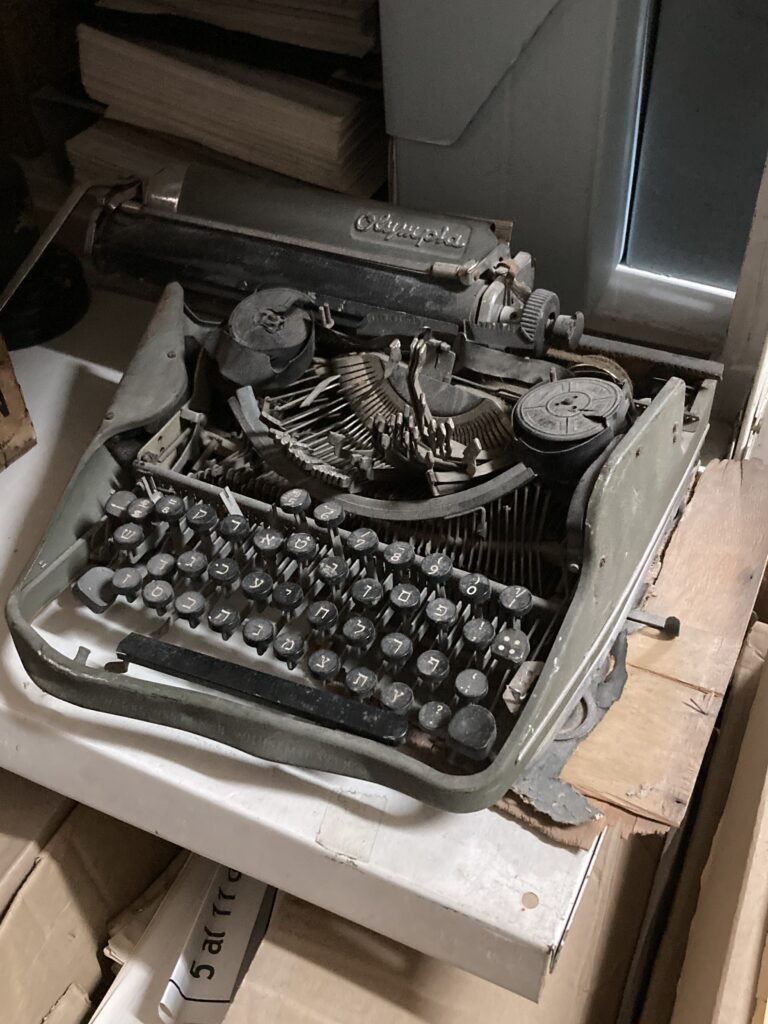
The first typewriter was warped and crumpled, crushed in the 1994 bombing of the AMIA building. AMIA, which stands for Asociación Mutual Israelita Argentina, was a Jewish cultural center home to the Argentinian branch of YIVO, known as IWO. Since then, IWO has relocated several times. As I wandered through the archive on the second floor, I came across a typewriter hidden in plain sight on a bookshelf. It was the first typewriter I had seen with the alef-beys. I was puzzled by its twisted metal frame and only later learned of the damage it had sustained during the bombing.
The second typewriter was pristine, enclosed in a black box. In the cramped archives of the Yidisher Kultur Farband, or ICUF, the archivists showed us captivating children’s books, women’s journals, and fashion illustrations. At the end, they pulled out a working Yiddish typewriter and told us to write whatever we wanted.
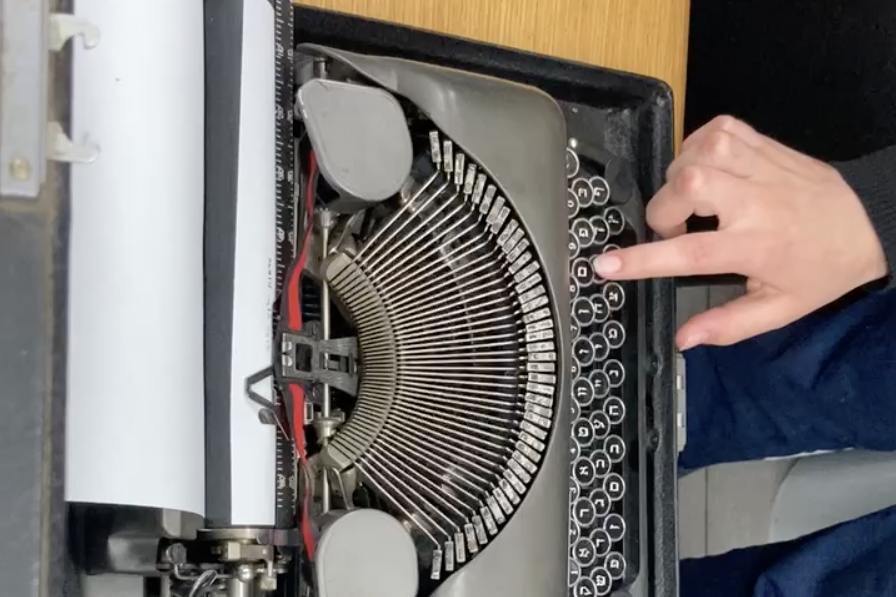
We gathered around and debated about what to write. A joke? A thank you letter to ICUF?
We decided to write a thank-you letter to the program and sign our names.
“In memory of Naomi Prawer Kadar,” read the first line.
Underneath it came our names and some personal notes, the fading ink hard to read.
When my turn came, I double-checked each key I pressed. What if I spelled my name wrong?

For better or for worse, it’s easy to get overcome with nostalgia when visiting an archive. And it’s easy to anthropomorphize a historical object like a typewriter. But these two feelings made me feel a little bit more connected to people in an unfamiliar country.
The first typewriter, a little sad and broken, sparked vivid questions. I wondered about the stories it held. What letters were once written on those keys? Where were they sent to? Did any giggling kid in the building ever sneak over to type a few words?
The second typewriter, happily clicking along, brought about other emotions. As we signed our names at the end of the letter, we became part of the hundreds of people who had done the same. Is it possible that others misspelled their names, just like I did? I’m so grateful I got to visit these two wonderful archives!
