
By Jacqueline Gurevich
The Dybbuk, a play written by S. An-sky, is one of the most renowned Yiddish plays, which has been greatly celebrated and adapted into countless productions throughout the years. The Dybukk, at its most basic level is about a love story between Chonnen and Leah, a young woman who is betrothed to another man. Struck by heartbreak Chonnen tragically dies. Right before Leah’s intended nuptials, Chonnen’s soul possesses Leah as a dybbuk. Unwilling to live without Chonnen, Leah sacrifices herself and joins Chonnen in death. Despite its relatively simplistic plot, The Dybbuk is about so much more than a simple love story. Through his play, S. An-sky, was able to beautifully present an ethnography of Jewish life in early Eastern Europe and more importantly to capture the Yiddish spirit that has inspired so many artistic talents. One such artistic talent was Jerome Robbins, an American theater producer, director, and dance choreographer.

Robbins originally Rabinowitz, the son of Eastern European immigrants, began his career in dance learning Ballet at the New Dance League.1 He got his start on Broadway, performing in several Broadway shows. Robbins eventually shifted from theater to Ballet, choreographing many productions for New York City Ballet, Ballet U.S.A., American Ballet Theatre, and other international companies. His first chorographical attempt was Fancy Free, a ballet performed at the Metropolitan Opera. It was on this set that he met Leonard Bernstein and formed a partnership that would lead to much collaboration.
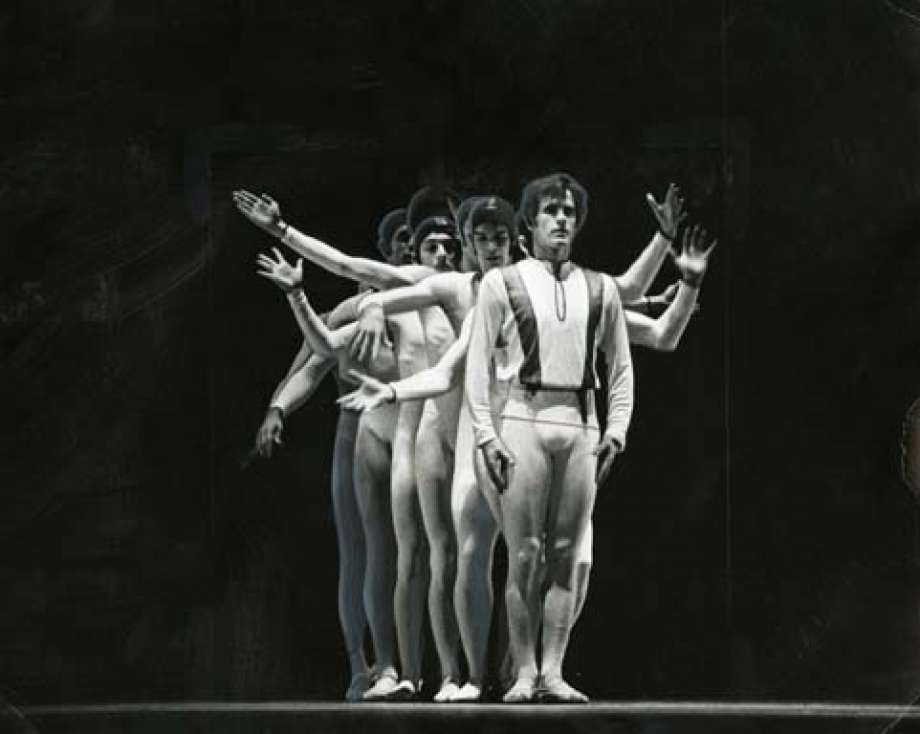
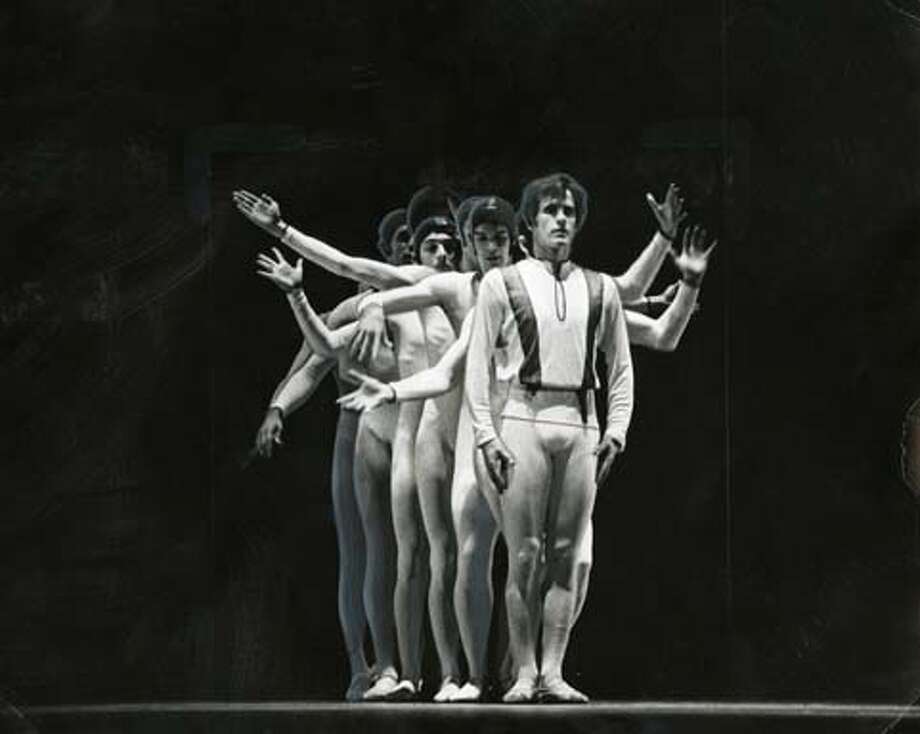
Leonard Bernstein, also the son of Eastern European immigrants, is a famous composer most known for his composition of West Side Story.2 In 1958, Robbins reportedly sent a letter to Bernstein stating, “I’m sending over an unseen but continually haunting prodder who will creep into your sleep and into your spare moments and will say the words Dybbuk, Dybbuk, Dybbuk. With this ghost’s effort, I know that suddenly something will be on paper that will get us all started.”3 With this letter, Robbins set in motion the idea of adapting S. An-sky’s play into a ballet. And in 1974 in collaboration with Leonard Bernstein, The Dybbuk, premiered at the New York City Ballet.
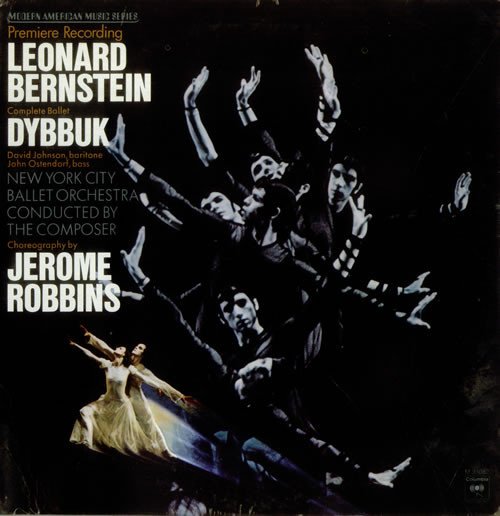
Robbins has often been quoted saying he never intended to merely recreate An-sky’s play, but rather transcend the ideas of mysticism and tradition to modern day and in ballet form. He is quoted saying, “[I see this ballet] as a point of departure for a series of related dances concerning rituals and hallucinations which are present in the dark magico-religious ambiance of the play and in the obsessions of its characters.”4 Similarly, Leonard Bernstein sought to add a spiritual tone to his composition. He derived his composition by using “a mathematical sequence, based on the 22 letters of the Hebrew alphabet, with 18s and 36s within the octave range,”5 adding a Kabbalistic element to his score.
It is fascinating that although Robbins and Bernstein are both considered renowned American artists, much of their work stemmed from their Jewish roots. In fact in a 1974 interview with Newsweek, both men were asked about their inspiration for The Dybbuk to which Robbins professed, “Choosing The Dybbuk had nothing to do with my being Jewish.” However, Bernstein disagreed stating, “In a larger sense, what we’ve had is based on our experience of Jewishness. Isn’t that right, Jerry?” Although initialy reluctant to admit, Robbins eventually stated, “I don’t know, but we are what we are, and that feeds into it.”6 Just as The Dybbuk centers on the idea of a returning spirit, so here we see the relentless Jewish spirit that proliferates the mind of every generation. Although Leonard Bernstein’s music has been said to “speak with a New York accent… his sensitivity to his Russian and Jewish roots are never far from his lyrical expressivity.”7
The ballet divided into eleven sections was performed by Patricia McBride as Leah and Helgi Tomasson as Chonnen. Patricia McBride performed for thirty years at the New York City Ballet and was one of Robbins’ favorite dancers. Helgi Tomasson was an equally talented lead and would later go on to become a famous choreographer for the San Francisco Ballet. Other dancers from the original cast include Bart Cook, Victor Castelli, Hermes Conde, and Tracey Bennet.8 The play received mixed reviews. It was hailed by Newsweek as “the loving handiwork of inspired men.”9 However, others reported the plot to be uninspiring and the choreography cold. Such reviews led Robbins to continuously edit the ballet, until finally the New York City Ballet dropped it in 1980. Interestingly, Helgi Tomasson who was the original Chonnen in 1974 led a revival of the ballet in 2005 at the San Francisco Ballet. The Dybukk is a play that lives on and is one that will continue to be adapted and revived for many years to come.
- “Jerome Robbins 1918-1998.” NYCB. Accessed July 28, 2021.
- Mauceri, John. “Leonard Bernstein — The Composer.” leonardbernstein.com. Accessed July 28, 2021.
- Carman, Joseph. “Reclaiming ‘The Dybbuk.’” The Jewish Daily Forward. April 1, 2001. Accessed July 28, 2021.
- Ibid.
- Ibid.
- Ibid.
- Mauceri.
- “Dybbuk (Ballet).” Wikipedia. Wikimedia Foundation. Accessed November 8, 2014.
- Carman.
