My time as an Irene Kronhill Pletka Fellow informed not only my study of Yiddish, but my study of history and Jewish thought, and even my own personal academic development.
Being able to come into the YIVO office and work in archive processing under Hallel Yadin’s supervision was an experience unlike any other. My hours spent working in YIVO’s archivist space both informed me about the nature of archive processing and granted me the ability to learn from YIVO’s incredible community of genius, dedicated librarians and archivists. During my hours engaging in translation and finding aid processing for Hallel, I was able to work in the YIVO archivist offices. Here, I learned not only about the Yiddish library science field but gained a deeper understanding of YIVO’s archivist organizational structure. Helping to build, translate, and finalize finding aids, like with the Bina Applebaum archive finding aid, allowed me to contribute to YIVO in ways that actively push the institute forward.
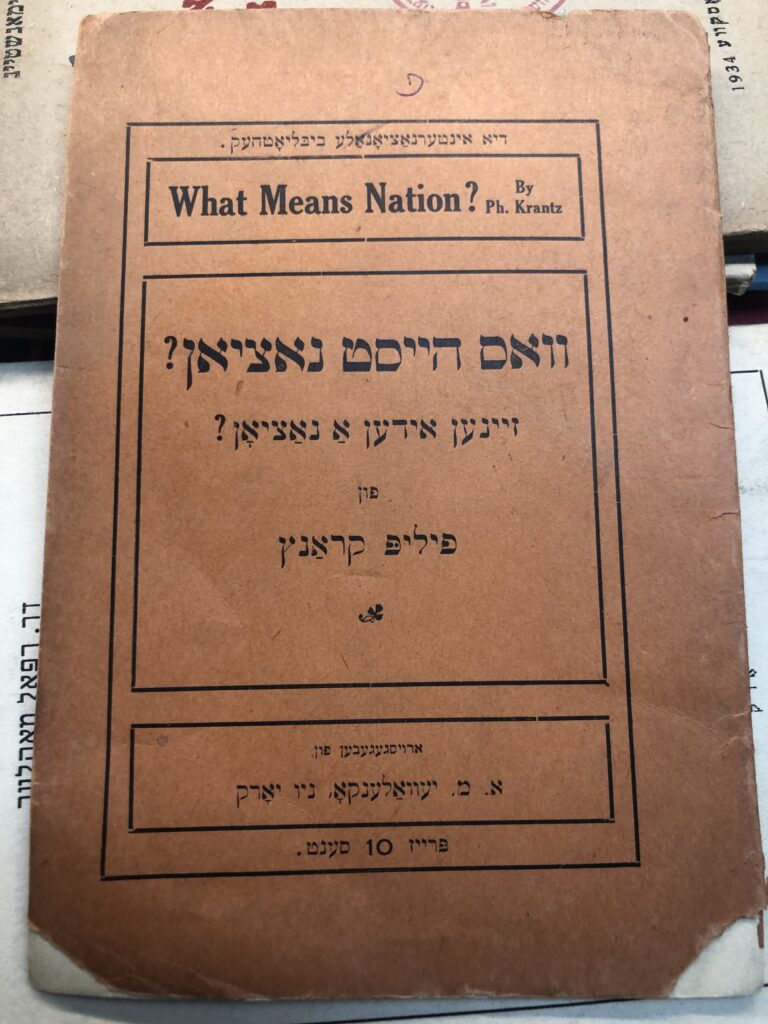
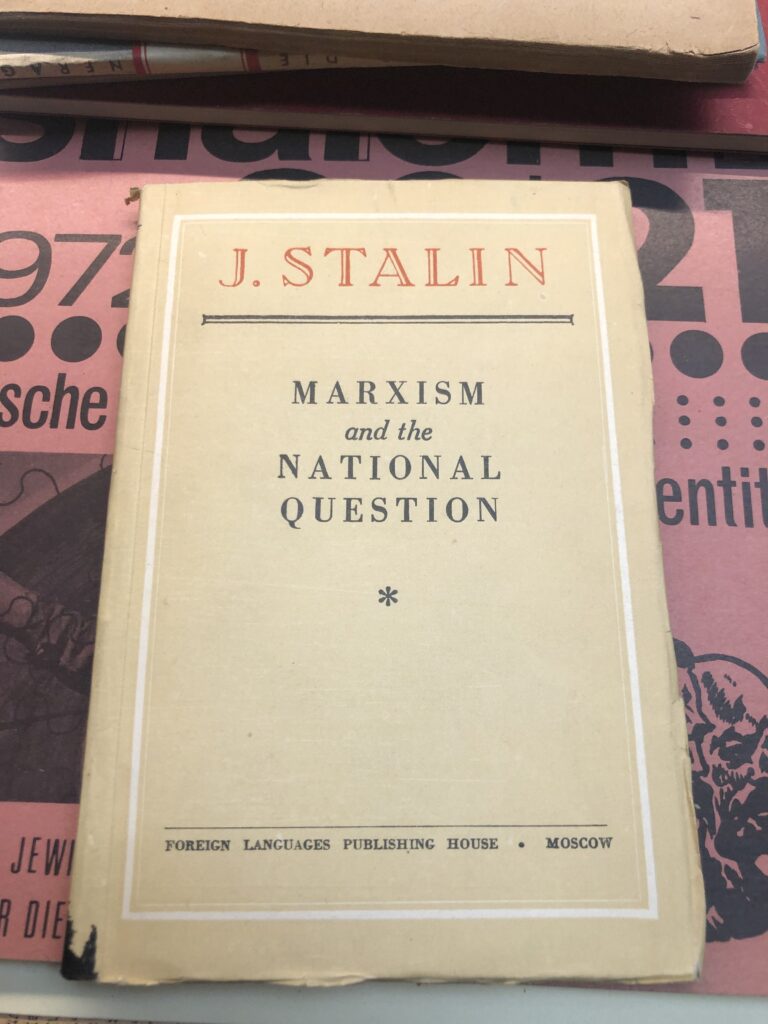
Throughout my time as a Pletka fellow, the independent research hours I had in the YIVO archives eventually contributed towards what became my undergraduate thesis, entitled “The Jewish Labor Bund’s National Cultural Autonomy Program: A Judeo-Marxist Exploration of Jewish Identity Futures in Times of Revolution.” My independent project explored the Bund’s understanding of Jewish identity and peoplehood from its founding and up until its schism with the Russian Social Democratic Labor Party (RSDRP, Rossiyskaya sotsial-demokraticheskaya rabochaya partiya) in 1903. The Bund’s articulation of a National Cultural Autonomy program is a model for how minority groups can retain and celebrate their ethno-cultural traditions while creating the forward arch of Russia’s Marxist revolution. I went on to argue, through a Judeo-Marxist lens, that the Bund’s national cultural autonomy platform opens up the possibility for revisiting forgotten visions of Jewish futures oriented towards sustaining minority tradition, language, and cultural practices while resisting the oppressive systems of capitalism and assimilationism.
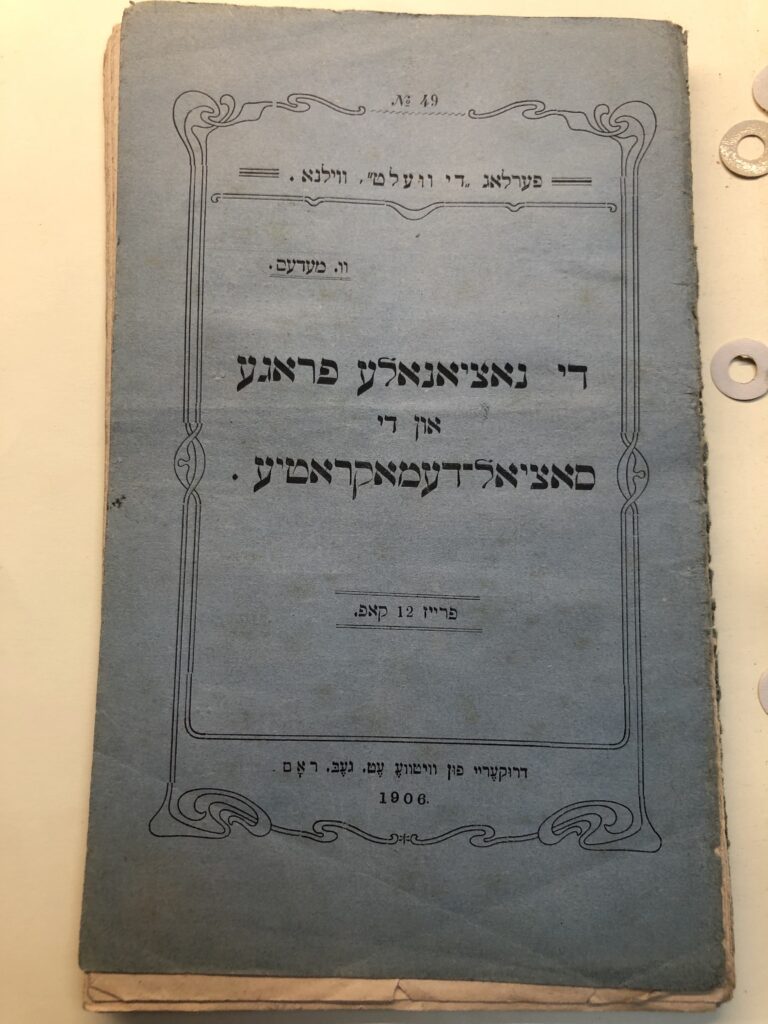
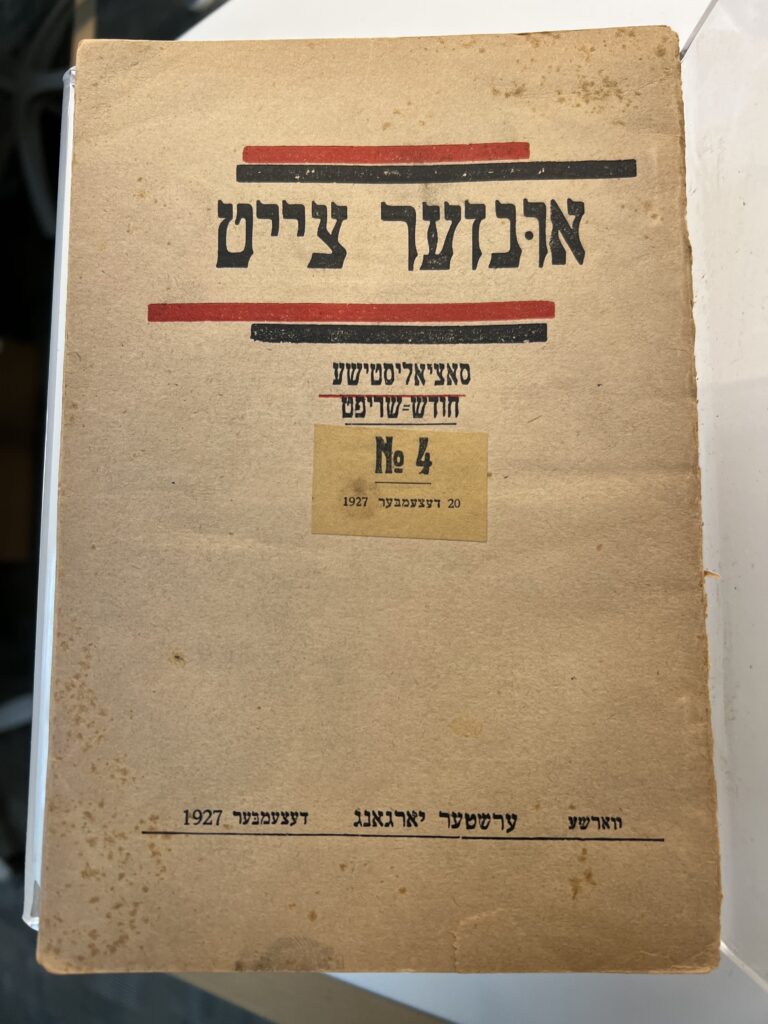
Of course, the Bund Archives were central in my ability to formulate and arrive at such a project. I was able to explore the Bund’s papers on Vladimir Medem and the Unzer Tsayt archives. I was able to personally look through the Bund’s internal history as an organization and trace the internal development of the party’s stance on Jewish national cultural autonomy.
Ultimately, the Irene Kronhill Pletka fellowship granted me the opportunity of a lifetime where I could explore the trove of YIVO’s archive and delve into the Bund’s archive right before the beginning of its exciting seven year digitization process. The development afforded to me by the Pletka fellowship as a Yiddish historian is insurmountable, and I would like to thank Hallel, Stephanie, Yaakov, Professor Agi Legutko, and CJH reading room librarians in helping me arrive at such a point in my independent research.