
Blume Lempel, “Correspondents”
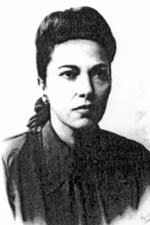 Blume Lempel was born in Galicia in 1907 1. She was offered little education because her father believed schooling was a waste for girls 2. She later moved to Paris where she lived for a decade before fleeing with her husband and children to New York, just before World War II. Upon arrival in New York, Blume Lempel reached out to the Yiddish literary sceneand began publishing a novel in 1943. Soon, she received news that her stepmother and stepbrother, still in Galicia, had been killed and her father, shortly after, committed suicide. In Paris, her only brother had been arrested and killed. Lempel, broken-hearted, destroyed all of her work and stopped writing for awhile. The effect of the Shoah can be seen through many of her pieces. Though she spoke both French and English, her writing continued to be in Yiddish. Yiddish was invaluable to her as it was her connection not only with those who died, but those who experienced the trauma of loss, similar to her own 3. Lempel’s writing tended to focus, then, less on those who were killed in the war and, rather, the survivors such as herself whose lives had been shattered. She explained in a letter to a colleague of hers that she wrote, “not for my readers, but for myself. I write for the dybbuk that is seeking a transformation through me” (“Oedipus in Brooklyn”).
Lempel wrote mostly about women. Her characters were unique, taboo, and shocking. Lempel’s subject matter included abortion, incest, and struggles with sexuality. Each of her characters were complex and different. She wrote about women and girls of all ages (“Oedipus in Brooklyn”).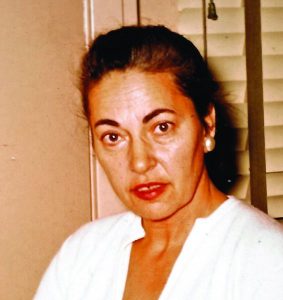
Troim Katz Handler writes that, “many of [Lempel’s] settings were very American. She bonded feelings about the songs of Frank Sinatra with thoughts of a lover,” giving an example from Lempel’s Gezangen nit Derzungen, which takes place in New York (“Blume Lempel”). Lempel was deeply engrossed in whichever environment she was living in at that time. This shows in her work. Having lived and engaged with so many places, her works feature a multitude of places: it is therefore clear that her choice of setting “Correspondents” in New York was not random 4.
“Correspondents”, translated by Irena Klepfisz, tells the story of a woman living in New York and the effects that both the Shoah and her sexuality have had on her psyche. The woman sits on a mostly empty New York subway car. She sees a man carrying a violin and reflects on her broken relationship with music. Her fixation on the instrument is an allegory for her fractured relationship with love, both as a product of her loss of family in the Shoah and her humiliation for loving women. The woman, speaking to another, contemplates:
Her voice heavy with unfulfilled longing caressed and at the same time repelled me. I felt myself engulfed by a spring breeze heavy with the scent of mint. My clothes suddenly felt tight. The seams burst and released the garment which I had concealed from the outside world as if I were ashamed of who I was…. I saw her as a rose infested with slithering worms (Lempel 238)
Lempel’s character sees that she is understood by another and is burning with shame. She sees their connection and pulls away. She is not comforted by her vulnerability but horrified. The character mulls over her experience with a cat whose kittens were killed and, upon the woman’s offer of milk and affection, swatted at her. Lempel’s character mimics the cat, believing this is the way to react to loss and shame: avoiding comfort and love and, instead, internalizing the pain. The woman to whom Lempel’s protagonist is speaking explains, “I am now attached to a young woman. It’s an extraordinary experience. Think about it, my dear. I’m enclosing the address of our club. It has many lost souls…. I’m certain that you’ll find there the right note for this life-performance” (Lempel 241). The character responds by destroying this card, unwilling to expose herself and, instead, almost comforted by her solitude and agony.
The setting of New York is instrumental to the protagonist’s loneliness and isolation. At this time, there were many other Jewish women living in New York who had shared her experience. This woman has access to meeting and relating with many and yet, she continued, instead, to isolate herself and deny her own happiness. Should the story be in a less populated area the isolation would be still tragic, but understandable. Here, it is hopeless. The main character is surrounded by options and tears them up, broken, ashamed, and alone.
What this story tells about Blume Lempel is up to interpretation, as there is not much information about her personal life.. It is clear that she is writing about her experience of heartbreak from the death of her own family members. The question of sexuality, though, is interesting. Indeed, the account of this woman’s self-disgust is so intimate that it seems as though Lempel must be writing from experience. Ultimately, it is impossible to know, and Lempel’s brilliance lies in her ability to imagine intricate and realistic Jewish women.
Image Sources
Jewish Women’s Archive. “Blume Lempel.” Accessed 8 Oct, 2017 <https://jwa.org/media/lempel-blume-small-still-image>.
Blume Lempel. Phil Jason Reviews Books, WordPress, 19 Nov. 2016, philjason.wordpress.com/2016/11/19/oedipus-in-brooklyn-and-other-stories-by-blume-lempel/. Accessed 8 Oct. 2017.
Lempel, Blume. “Correspondents.” Translated by Irena Klepfisz. Found Treasures: Stories by Yiddish Women Writers.
- “Oedipus in Brooklyn and Other Stories by Blume Lempel.” Youtube, uploaded by YIVO Institute for Jewish Research, 12 May 2017, www.youtube.com/watch?v=iBLfCYVxIeU. Accessed 8 Oct. 2017.
- Handler, Troim Katz. “Blume Lempel.”Jewish Women: A Comprehensive Historical Encyclopedia. 1 March 2009. Jewish Women’s Archive, https://jwa.org/encyclopedia/ article/lempel-blume. Accessed 8 Oct. 2017.
- “Discovering and Translating Yiddish Writer Blume Lempel.” The Schmooze, episode 0128, Yiddish Book Center, 14 Dec. 2016, www.yiddishbookcenter.org/language-literature- culture/the-shmooze/128-discovering-and-translating-yiddish-writer-blume-lempel. Accessed 8 Oct. 2017.
- Ellen Cassedy. 2016, www.ellencassedy.com/about-oedipus-in-brooklyn/. Accessed 8 Oct. 2017.
