
By Joshua Brenner
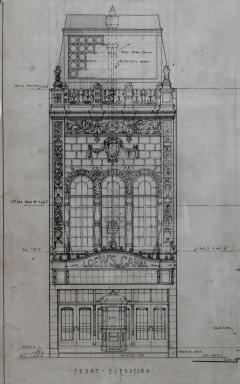
The Lower East Side of New York City is known for its role in the 19th– and early 20th-century immigrant experience. By the mid-19th century, the Lower East Side began a transition from an upstanding residential community to a poor immigrant neighborhood as significant numbers of Irish immigrants left their homes in search of economic opportunities.1 Hundreds of thousands of immigrants left their homelands and wound up in New York City searching and hoping for a better life. The Loew’s Canal Street Theatre is a unique part of the immigrant story of the Lower East Side of New York City because it was not only built by an immigrant but was built for the local population. Namely, immigrants and their growing now-American families. Built in 1926, it was the second largest motion picture theater (2,300 seats), when it opened in 1927. The Loew’s Canal Street Theater located at 27 Canal Street is a grand architectural statement and also represents an inextricable link between Marcus Loew’s past and his company’s future.
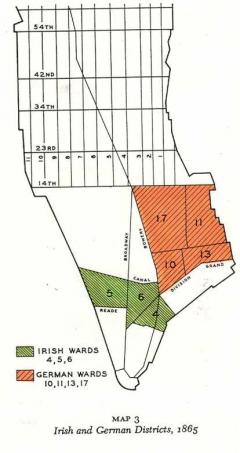
Marcus Loew was born on May 7th 1870 to Herman and Ida Loew. Marcus was the middle of five children and the first child from Ida and Herman’s marriage. He grew up in the immigrant neighborhood popularly known as Little Germany, Kleindeutschland or Deutschländle.2
Although his family was poor Marcus received both a secular and a Jewish religious education. Unfortunately, mounting economic pressures forced Marcus to take up work at a local newsstand by age six and by age nine he had quit both school and his newsstand job for higher wages at a map-printing plant. Over the next fifteen years Loew would work in various industries including the print and garment industries. He and a partner started a small weekly newspaper which had modest distribution and profits but unfortunately failed. Loew switched to the fur business and after a few years of grueling factory work, went into business for himself as a fur broker. Loew’s attempts at the fur trade had the same success as his newspaper and he was bankrupt by age 19. Loew remained in the fur industry as a salesman in order to pay off the debt which he had incurred from his failed enterprise. By 1897 and at age 27 Loew was a veteran in the fur business but was looking for more income to support his wife and two sons.
In 1899 Loew was finally picking up momentum and had some modest real estate investments. Through the course of doing business Loew met two men who would help change his life forever. The first was a popular stage actor David Warfield and the second was Adolph Zukor, a Chicago fur merchant who was more eager than Loew to get out of the fur business. Zukor had partnered up with a small group of fur merchants and started a small chain of penny arcades. The arcades named Automatic Vaudeville were storefronts which featured early movies and coin operated amusement machines. The group was looking to expand into other cities after opening a successful first location in New York and Zukor offered Loew an opportunity to invest in the firm. Loew, having little personal capital to invest, told Warfield about the opportunity and the two invested together $15,000 (approximately $400,000 in today’s dollars).

Loew quickly started his own penny arcades, becoming a competitor for his old business partners. After a few years he began renting films and screening them to audiences at his arcades in addition to the machines and live-action performances. All of the films and performances were relatively short and allowed for a constant churn of audiences, which in turn led to more revenue. By 1910, he operated and owned vaudeville theaters in all five boroughs of New York City. Loew continued to expand within the vaudeville business but lagged in the motion picture industry. However, Loew rekindled an old partnership with Adolph Zukor who had been more involved with production and distribution of films. Due to good luck, timing, and advice, he expanded beyond the arcade business.
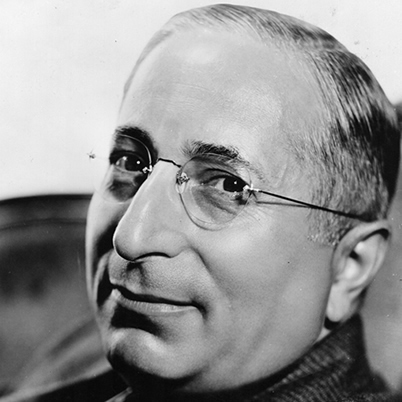
By 1919, the two were working together closely again. Zukor was making and producing films and desperately needed more outlets. Loew wanted to open more theaters but needed a guaranteed supply of films. Loew reorganized his business to focus solely on motion pictures and then began to expand rapidly. His preferred method of expansion was to simply acquire other firms and use their existing physical capital. Ultimately, Loew bought a small production company, Metro Pictures in order to protect his growing theater chain by continuously providing content to screen. By 1924 Loew hit the precipice of his expansion on the production side of his business by merging Metro Pictures with Goldwyn Pictures and an independent producer named Louis B. Mayer. Together, they formed the now-famous MGM Studios conglomerate.3
The rise of film and Loew’s empire coincided perfectly with the rise of the Lower East Side as a neighborhood for (Jewish) immigrants. In fact, for much of the early twentieth century the area was home to the greatest concentration of movie houses in the nation.4 Thus, it was not a great surprise that Loew would build a theater in the area. While Loew had been raised in the neighborhood he had focused few of his business outlets there. His penny arcades were located in uptown and mid-town Manhattan as they were all more established and recognized areas for entertainment. With his unwavering focus on expansion, Loew did manage to take over a lease of the Grand Theatre in 1909. He later fostered his small presence in the area and opened two additional theaters close to the Grand Theater. By the early 1920s Loew was focused on developing his motion picture empire and leaving vaudeville behind. He was now competing with other national movie theaters and the Lower East Side was no different. Loew’s top competitor was Charles Steiner, an independent movie theater operator who had formed The Greater M & S Circuit. The growing circuit sought to compete with chains like Loew’s and constructed seven large theaters, the most regal of which was the 2,800 seat Commodore located on Second Avenue.5
Not to be outdone, Loew began buying parcels of land in January of 1926 with hopes of developing the parcels into a grand theater of his own. Soon after the acquisition of the plots Loew commissioned architect Thomas W. Lamb to design the 2,300 seat theater.6 Lamb was a Scottish immigrant who was educated at Cooper Union in New York City and was highly acclaimed for his design of sophisticated and elegant theaters, both film and stage. By the time of Loew’s commission he had already designed six Broadway theaters, two additional theaters in other boroughs and numerous countries throughout the world. Over the course of his life and career Lamb was credited with the design and construction of over 300 theaters all over the world, 48 of them in Manhattan. He developed his personal style in the 1910s which emphasized broad swaths of cream or white-colored, glazed terra-cotta, trace amounts of polychromy and large elements like deep dramatic piers or window recesses. The Audubon Theater was another Lamb design and was built a few years before the Canal Street Theatre. Today it is still partially intact at 165th Street and Broadway and features a facade of muscular terra-cotta frames around big show windows, with the humorous decorative touch of foxes’ heads.7 Lamb would continue his work with Loews Inc. and designed the Newark, New Jersey theater as part of the “Loew’s Wonder Theaters” series.
On the Lower East Side, Lamb designed a three story building with a final seat count of 2,270. The primary façade of the theater is made from white terra-cotta and decorated in a Spanish baroque style. The heavy ornamentation which is indicative of the style includes masks, wreaths, griffons and other classical ornamentations. Below the façade is more decoration carved into the stone. An elaborate cornice is in the middle of the building and sits just above three triple arched faux windows which are glazed in black and framed with urns and foliage.8 The most flamboyant ornamentation was reserved for the cornice line and distinguishes the Canal Street Theatre from the earlier designs produced by Lamb. The griffons, eagles and sea monsters are interspersed with foliage in an explosion of decoration. The ground floor consists almost entirely of a large rectangular opening that was once fitted with a series of doors flanking a central box office. The upper floors are completely clad in terra-cotta with projecting piers running along the full height of the building’s corners. The blind openings on the second story, which are fitted with rare black terra-cotta designed to mimic window panes, hide the mechanical equipment of what was originally the theater’s fan room.9 Both Lamb and Loew designed this theater in order to create a sense of wonder and an experience of going to the movies that could not be outdone.
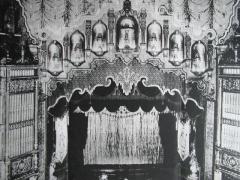
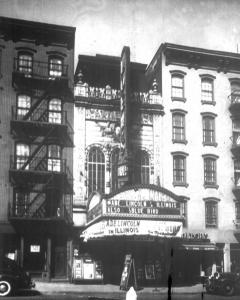
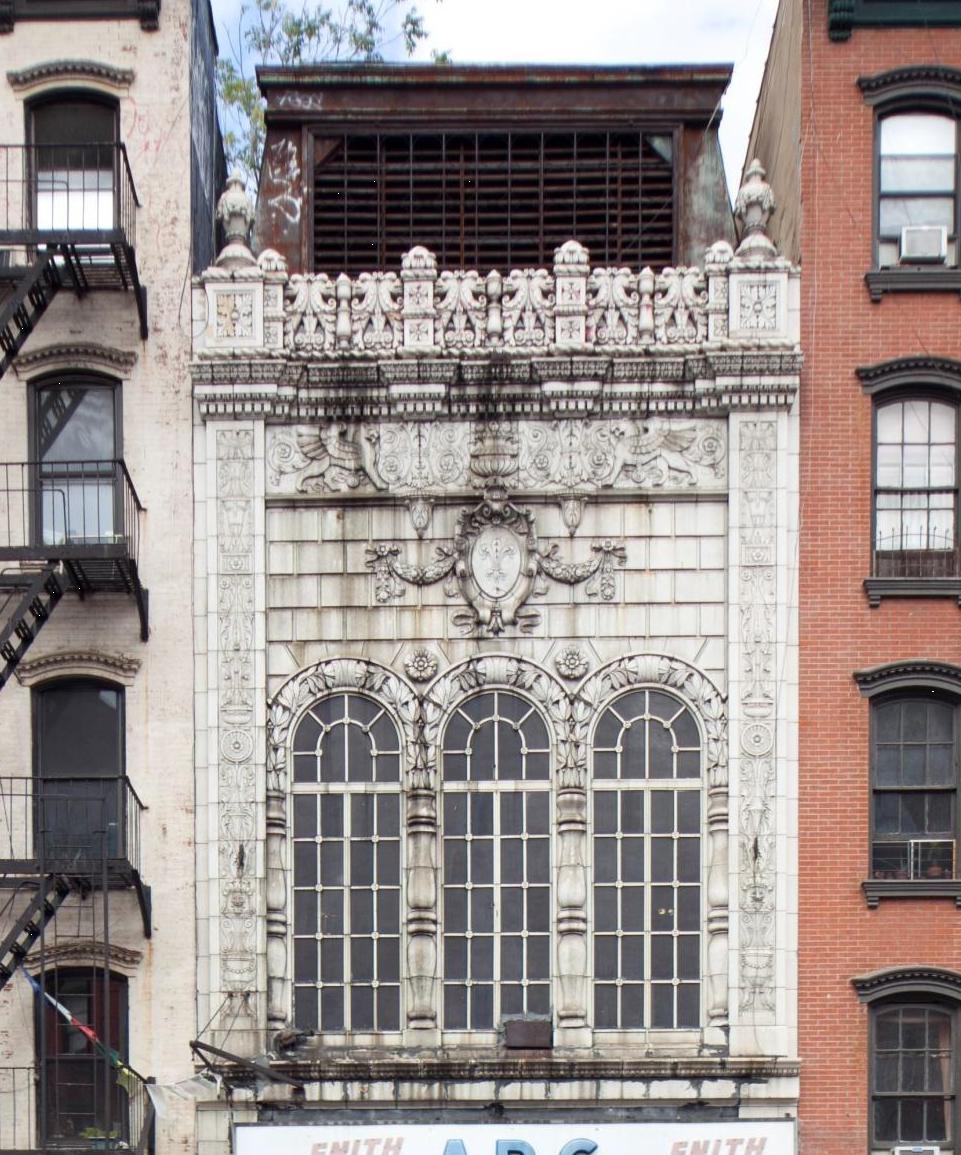
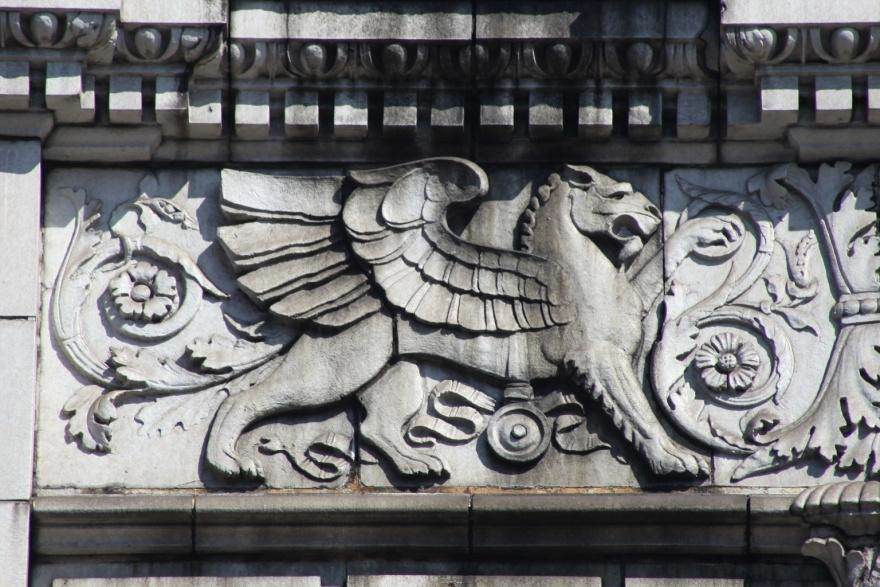
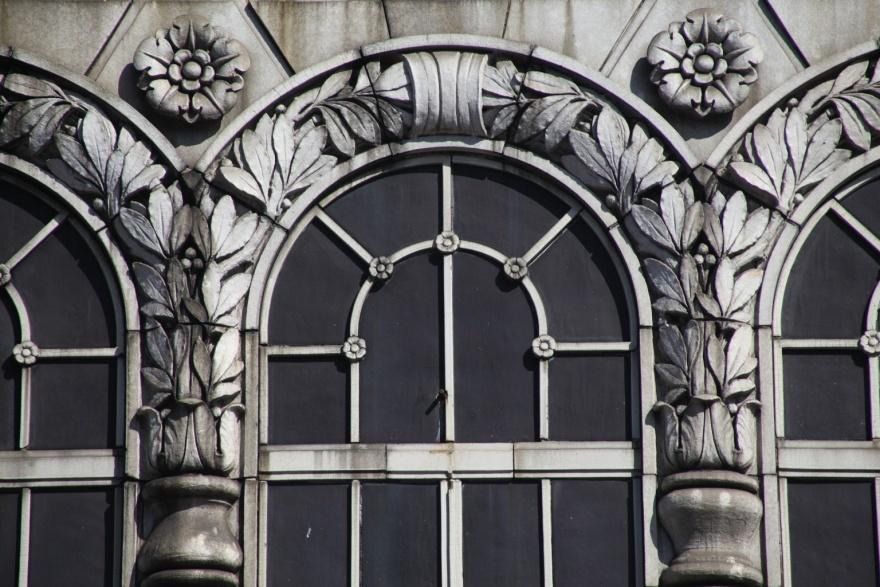
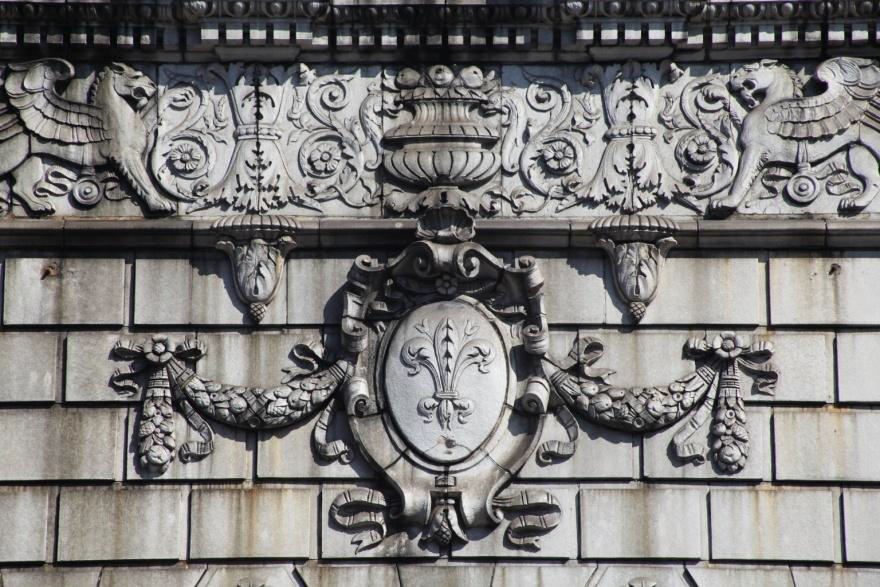
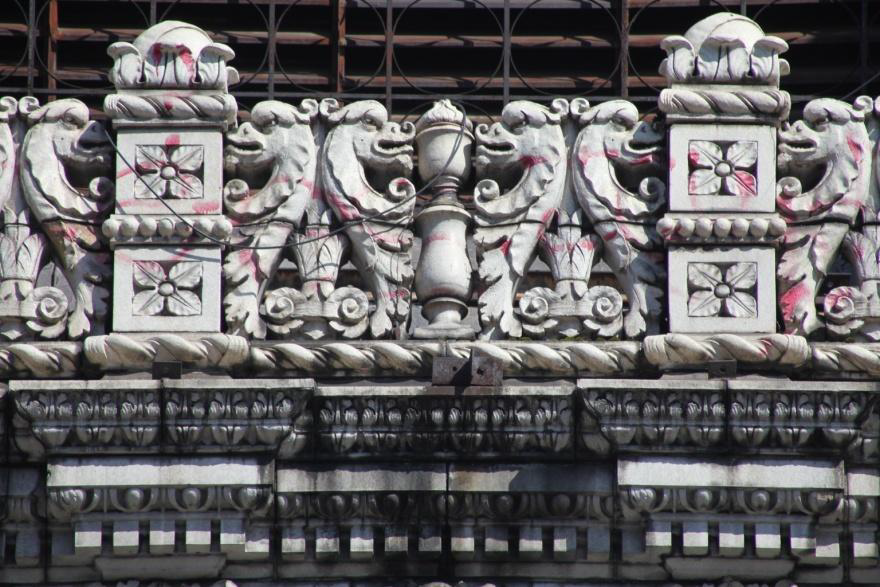
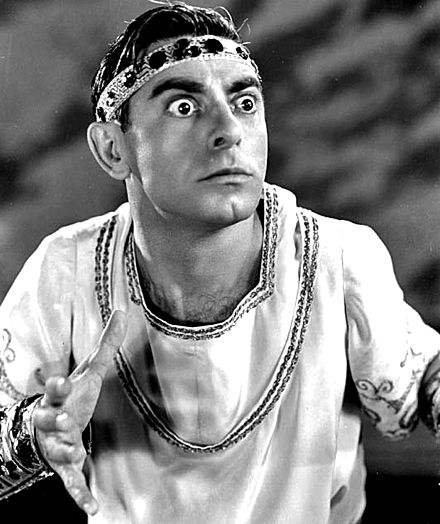
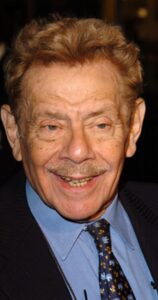
After a year of construction, the theater opened in 1927, the same year of Marcus Loew’s unexpected death. The theater and the film worked together to produce a fantasy experience that would remove the customer from their tenement lives, even if for just a short while.10 But the Canal Street Theatre took on a role beyond that of just a typical movie house. It helped to inspire some of the first-generation children who attended its films to pursue their own film careers. Show-business greats Eddie Cantor and Jerry Stiller were born and raised on the Lower East Side just a few blocks from the Canal Street Theatre. Perhaps not together, both grew up watching films within the white terra-cotta dream theater. Stiller is quoted as saying “We used to go on Saturday morning at the Loew’s Canal. At 9 in the morning, they’d show things like the Fitzpatrick Traveltalk, cartoons and serials like Flash Gordon. By the time you got to 10:30, they’d get to the double-header, two pictures in a row. What happened was, your mother or father would drop you off at 9, and they didn’t have to pick you up until 3. That’s where we got our education.”11 Moreover, Cantor had the world-premiere of his film Forty Little Mothers at the theater on April 17th, 1940, an event which was extremely exciting for both Cantor and the whole Lower East Side.12
With its elegance fading and customers leaving the Lower East Side, the Canal Street Theater was permanently closed in the late 1950s and the once lively building was sold in 1960.13 The interior of the space was gutted and later converted into retail and light industrial space. Over the years stores moved in and out of the theatre until the building was eventually purchased by a real estate developer in Chinatown, Thomas Sung.
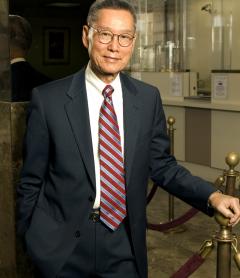
Sung purchased the building with initial hopes of developing it into a more commercially lucrative space but faced opposition in 2010 from an arts coalition who sought to make the space a landmark and transform it into a Chinese cultural center. While Sung ultimately aligned himself with the movement to make the building a landmark, his firm did research the possibility of building apartments above the theater in 2009. Sung eventually went in front of the NYC Landmarks Commission and stated:
“We are pretty much in agreement with the Landmarks Commission in designating this building as a landmark. Our family, when we first bought the building, as with any investors, of course we were hoping to develop the property. Throughout the years that we have owned the building the property value has matured. We are in the process of trying to convert the building, with the preservation, as a landmark. It places a look of restrictions of the uses of the building. However I must say through the dedicated, able staff of the commission, we deeply appreciate bringing to us awareness of the historic value of the building. At some point in life we all must recognize, I guess, the value beyond a commercial purpose, so we are very much in a frame of mind to cooperate with the Landmarks Commission.”14
The motion was granted and on September 14, 2010 the Loew’s Canal Street Theatre was given its landmark status by the NYC Landmarks Commission.15 The status will allow the theatre to be repaired and maintained so that it will continue to instill the wonder, elegance and beauty intended by its designer Thomas Lamb and its financier Marcus Loew. Though the Lower East Side continues to evolve and house new groups of people, this small portion of Canal Street will remain undisturbed. While it may no longer screen films those who seek a wondrous fantastic story filled with heroes and villains need only to read the story of the man whose name it bears, Marcus Loew.
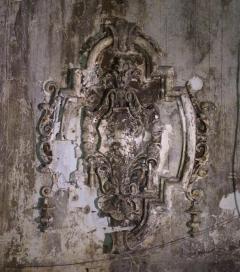
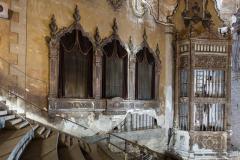
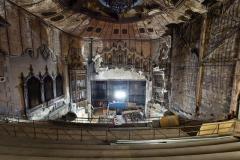
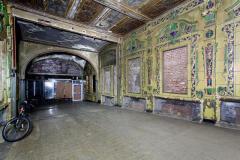
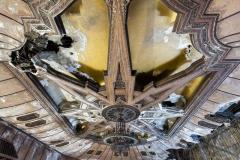
Image Sources
Figure 1. Columbia University Libraries, Avery Architectural & Fine Arts Library, Drawings & Archives Department. Accessed December 18, 2014.
Figure 2. http://bigthink.com/strange-maps/663-death-of-little-germany-how-a-ship-sank-an-enclave. Accessed December 18, 2014.
Figure 3. https://www.lizaketchum.org/blog/vaudeville-entrepreneur-marcus-loew/; http://www.josephhaworth.com/david_warfield.htm; https://www.immigrantentrepreneurship.org/images/adolph-zukor-and-marcus-loew-1923/. Accessed December 18, 2014.
Figure 4. https://waldina.com/2013/10/09/louis-b-mayer-style-icon/. Accessed July 13, 2021.
Figure 5. https://www.youtube.com/watch?v=XVEflECtfBM. Accessed December 18, 2014.
Figure 6. https://www.youtube.com/watch?v=NVbslx3AGQ4. Accessed December 18, 2014.
Figure 7. http://gothamist.com/2014/06/27/photos_breaking_in_to_the_ old_loews.php. Accessed December 18, 2014.
Figure 8. New York City Department of Taxes Courtesy New York City Municipal Archives. Accessed December 18, 2014.
Figure 9. Brazee, Christopher D. “LOEW’S CANAL STREET THEATRE, 31 Canal Street, Manhattan Built 1926-27; Thomas W. Lamb, Inc., Architect.” NYC Landmarks Preservation Commission. N.p., 20 Sept. 2010. Accessed December 18, 2014.
Figure 10. Brazee, Christopher D. “LOEW’S CANAL STREET THEATRE, 31 Canal Street, Manhattan Built 1926-27; Thomas W. Lamb, Inc., Architect.” NYC Landmarks Preservation Commission. N.p., 20 Sept. 2010. Accessed December 18, 2014.
Figure 11. Brazee, Christopher D. “LOEW’S CANAL STREET THEATRE, 31 Canal Street, Manhattan Built 1926-27; Thomas W. Lamb, Inc., Architect.” NYC Landmarks Preservation Commission. N.p., 20 Sept. 2010. Accessed December 18, 2014.
Figure 12. Brazee, Christopher D. “LOEW’S CANAL STREET THEATRE, 31 Canal Street, Manhattan Built 1926-27; Thomas W. Lamb, Inc., Architect.” NYC Landmarks Preservation Commission. N.p., 20 Sept. 2010. Accessed December 18, 2014.
Figure 13. Brazee, Christopher D. “LOEW’S CANAL STREET THEATRE, 31 Canal Street, Manhattan Built 1926-27; Thomas W. Lamb, Inc., Architect.” NYC Landmarks Preservation Commission. N.p., 20 Sept. 2010. Accessed December 18, 2014.
Figure 14. http://en.wikipedia.org/wiki/Eddie_Cantor. Accessed December 18, 2014.
Figure 15. https://www.imdb.com/name/nm0005467/. Accessed July 14, 2021.
Figure 16. http://www.crainsnewyork.com/article/20130407/FINANCE/ 304079977/big-trouble-little-chinatown-bank. Accessed December 18, 2014.
Figure 17. http://gothamist.com/2014/06/27/photos_breaking_in_to_the_old_ loews.php. Accessed December 18, 2014.
Figure 18. http://gothamist.com/2014/06/27/photos_breaking_in_to_the_old_ loews.php. Accessed December 18, 2014.
Figure 19. http://gothamist.com/2014/06/27/photos_breaking_in_to_the_old_ loews.php. Accessed December 18, 2014.
Figure 20. http://gothamist.com/2014/06/27/photos_breaking_in_to_the_old_ loews.php. Accessed December 18, 2014.
Figure 21. http://gothamist.com/2014/06/27/photos_breaking_in_to_the_old_ loews.php. Accessed December 18, 2014.
Works Cited
Brazee, Christopher D. “LOEW’S CANAL STREET THEATRE, 31 Canal Street, Manhattan Built 1926-27; Thomas W. Lamb, Inc., Architect.” NYC Landmarks Preservation Commission. N.p., 20 Sept. 2010. Web. 17 Dec. 2014.
Gray, Christopher. “An Architect for Stage and Screen.” The New York Times. The New York Times, 04 Oct. 2008. Web. 17 Dec. 2014.
Litvak, Ed. “Owner of Loew’s Canal Theater: Supports Preservation, Assessing Economic Impact of Community Space.” The LoDown News from the Lower East Side. N.p., 22 June 2010. Web. 17 Dec. 2014.
“Marcus Loew,” Immigrant Entrepreneurship, 2014, Immigrant Entrepreneurship. 17 Dec 2014 http://www.immigrantentrepreneurship.org/entry.php?rec=88.
Mendelsohn, Joyce. The Lower East Side Remembered and Revisited: A History and Guide to a Legendary New York Neighborhood. New York: Columbia UP, 2009. PDF.
“Photos: Inside The Abandoned Old Loew’s Theatre On Canal Street.” Gothamist. N.p., 27 June 2014. Web. 17 Dec. 2014.
Thissen, “National and Local Movie Moguls: Two Patterns of Jewish Showmanship in Film Exhibition,” Jews and American Popular Culture, ed. Paul Buhle (Westport, CT: Praeger Publishers, 2007).
Footnotes
- Mendelsohn, Joyce. The Lower East Side Remembered and Revisited: A History and Guide to a Legendary New York Neighborhood. New York: Columbia UP, 2009. PDF, p. 13.
- Brazee, Christopher D. “LOEW’S CANAL STREET THEATRE, 31 Canal Street, Manhattan Built 1926-27; Thomas W. Lamb, Inc., Architect.” NYC Landmarks Preservation Commission. N.p., 20 Sept. 2010. Accessed December 17, 2014., 2.
- “Marcus Loew.” Immigrant Entrepreneurship, 2014, Immigrant Entrepreneurship. Accessed July 16, 2021.
- Thissen, “National and Local Movie Moguls: Two Patterns of Jewish Showmanship in Film Exhibition,” L 49.
- Brazee, p. 5.
- Ibid., p. 6.
- Gray, Christopher. “An Architect for Stage and Screen.” The New York Times. The New York Times, 04 Oct. 2008. Accessed December 17, 2014.
- Mendehlson, p. 78.
- Brazee, p. 7.
- Mendehlson, p. 78.
- “Photos: Inside The Abandoned Old Loew’s Theatre On Canal Street.” Gothamist. N.p., 27 June 2014. Accessed July 16, 2021.
- Mendelsohn, p. 78.
- Brazee, p. 8.
- Litvak, Ed. “Owner of Loew’s Canal Theater: Supports Preservation, Assessing Economic Impact of Community Space.” The LoDown News from the Lower East Side. N.p., 22 June 2010. Accessed December 17, 2014.
- “NYCityMap.” NYC.gov. N.p., n.d. Accessed December 17, 2014.
