
By Rachel Field
For immigrant Jews living on the Lower East Side, the two most important cultural institutions were the Yiddish Press and the Yiddish Theatre. The Yiddish Theatre played a multifaceted role in the lives of the Yiddish-speaking Jews who immigrated to America from Eastern Europe from 1882 to 1903. It not only provided a reprieve from the difficulties of adapting to life in America, but like the Yiddish Press, made literature available to the masses. More importantly, however, Yiddish theatre recreated shtetl life, preserving the familiar and evoking memories of the Old Country.
Howard Howe writes in his book World of Our Fathers that the year 1918 marks the beginning of the second era of Yiddish theatre in America.1 Whereas earlier Yiddish theatre appealed to the uncultured and uneducated masses, who demanded spectacle and melodrama, beginning in 1918, Yiddish theatre sought to cultivate more refined tastes and introduce serious productions to the Yiddish stage.
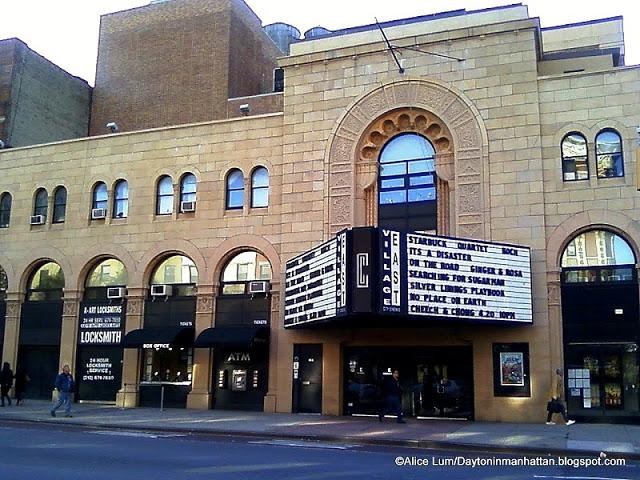
Among the theatres that appeared after 1918 was the Louis N. Jaffe Theatre, also known as the Yiddish Art Theater and Yiddish Folks’ Theater, located at 181 Second Avenue. The theatre was built by Russian lawyer Nathaniel Jaffe for Yiddish actor Maurice Schwartz, who in 1918 established the Yiddish Art Theatre (first located in the Irving Place Theater at 118 East 15th Street), a company that he hoped would devote itself to the performance of serious Yiddish theatre. Architect Harrison Wilson was commissioned to design the building at an estimated cost of $325,000.
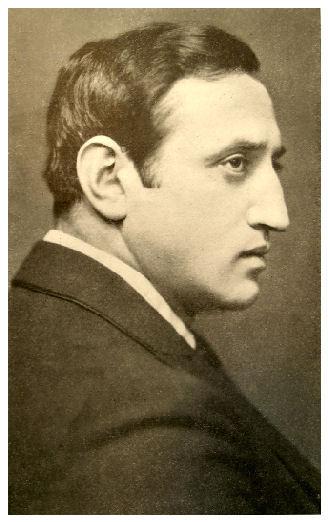
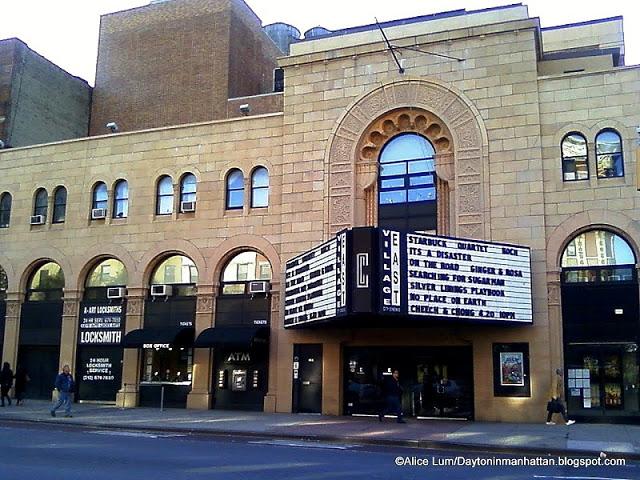
Although the Louis N. Jaffe Theatre housed Maurice Schwartz’s Yiddish Art Theatre for only four seasons, the 1,252-seat venue was home to Yiddish theater from 1926 to 1945, and was the site of Yiddish Theatre revival productions in the 1970s and 1980s. The building, which opened its doors on November 18, 1926 with an adaptation of Abraham Goldfaden’s Ten Commandments, included stores and offices, a school established by Schwartz for training young actors, as well as Jaffe’s film corporation–The Jaffe Art Film Corporation.
The three-story building gives the appearance of being only two stories. The exterior of the building is cast stone. A two-story arched window adorns the front of the building. Within the arch, two half-columns with seemingly oversized capitals, resemble two half-menorahs.
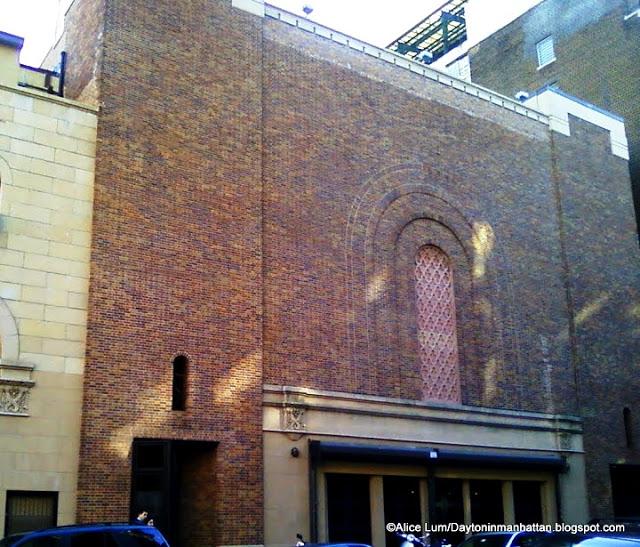
The rear of the building features brick inlaid with an arabesque of plaster, cast iron, and stone that recalls both Jewish and Moorish architectural motifs.
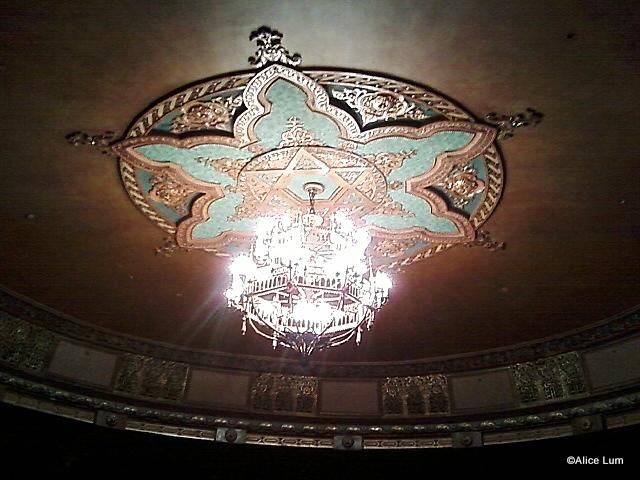
The interior of the theatre resembles the cast-stone exterior of the building. Walls feature painted faux travertine or textured plaster, and the ceilings are adorned with Jewish, Moorish, and Islamic motifs. The impressive ceiling consists of a Star of David, set within a six-pointed medallion. From the center of the Star of David hangs an elaborate, double-tiered chandelier.
Shortly after the theatre opened, conflict arose between Jaffe and Schwartz, Jaffe severed his ties with Schwartz, and the building remained unused for a year. In 1928, the building was sold.
The building was renamed the Yiddish Folks’ Theatre. From 1929-1930 the well-known actor Ludwig Satz starred in and directed several plays there. In 1930, the theatre was leased by the legendary Yiddish actress, Molly Picon, who renamed it Molly Picon’s Folks’ Theatre. Molly Picon used the company to bolster her own career, appearing in its productions for one season, until the theatre was foreclosed. A poster announcing her perforance of The Girl of Yesterday appears below.

For the next decade and a half, the theatre would be resold and renamed time and again. When in 1932, Maurice Schwartz returned, the theatre was renamed the Yiddish Art Theatre. However, Schwartz left again in 1934 in the middle of the season. The theatre reclaimed its old name, The Yiddish Folks Theatre, and a new company–the New York Art Troupe at the Yiddish Folks’ Theatre–directed by Joseph Buloff, Lazar Freed, and Jacob Mestel–finished off the season. Like Maurice Schwartz’s company, the New York Art Troupe at the Yiddish Folks’ Theatre rejected shund art in favor of more reserved, higher-caliber art. In 1935, the theatre was leased to Menasha Skulnik, a Yiddish comedian, and Joseph Rumshinsky. Below is a poster announcing Joseph Rumshinsky’s production of Abraham Goldfaden’s Bobe Yachne.

Beginning in the 1930s, the Yiddish Theatre on the Lower East Side was on a decline. This is generally attributed to a decline in Jewish immigration to New York beginning in 1924, assimilation, and the migration of many Jews from the Lower East Side to other areas of New York — Harlem, Brooklyn, and the Bronx–as they became more affluent.
From 1940 to 1941, the theatre was occupied by Jacob Wexler, an actor and the founder of the Hebrew Actors Union. Maurice Schwartz and Molly Picon both returned for special appearances. The theatre then closed for remodeling before reopening that same year. The theatre was purchased in 1944 by the M. H. R. Realty Corporation and had its final season as an exclusively Yiddish theatre–The New Jewish Folk theatre–under the direction of Jacob Ben-Ami, who had assisted Maurice Schwartz in the establishment of the Yiddish Art Theatre in 1918. The theatre became a movie theatre in March of 1946–the Stuyvesant Theatre–and remained so until 1953. From 1953 to 1961 the theatre was the home of an off-Broadway theatre company and renamed the Phoenix Theatre. The company received much acclaim for its productions of Shakespeare’s Henry IV and Hamlet. However, by 1961, the space was too much of a financial burden, and the Phoenix Theatre Company sold the space.
For the next twenty-five years, ownership of the theatre continued to change hands. During this period, both Yiddish theatre companies and small off-Broadway theatre companies called it their home. In 1977, the Entermedia Company was established for dance, experiemental theatre, and films. The company could not ignore the space’s long history of Yiddish theatre and produced a dance version of S. Ansky’s The Dybbuk, called The Possessed. In the coming years, attempts were made to revive Yiddish theatre with productions of two musicals–The Golden Land and The Chosen.
While the building of the Yiddish Theatre still exists on the Lower East Side, it no longer serves the purpose it once did and is no longer a vibrant and essential cultural institution. For immigrant Jews, the Yiddish Theatre represented an escape from the challenges of navigating a new world. Despite the attempts of actors and directors to bring more nuanced and refined art to the stage, the Yiddish Theatre was at its heart a theatre of emotion –– a means through which immigrant Jews could reminisce over the Old Country and find a glimpse of solace amidst the difficulties of their new lives.
Image Sources
Figure 1. https://www.findagrave.com/memorial/937/maurice-schwartz. Accessed December 17, 2014.
Figure 2. http://daytoninmanhattan.blogspot.com/2013/05/the-1926-yiddish-art-theatre-181-2nd.html. Accessed December 17, 2014.
Figure 3. http://daytoninmanhattan.blogspot.com/2013/05/the-1926-yiddish-art-theatre-181-2nd.html. Accessed December 17, 2014.
Figure 4. http://daytoninmanhattan.blogspot.com/2013/05/the-1926-yiddish-art-theatre-181-2nd.html. Accessed December 17, 2014.
Figure 5. https://ajhsboston.files.wordpress.com/2014/03/2014-03-07-1-molly-picon-3.jpg. Accessed December 17, 2014.
Figure 6. http://www.museumoffamilyhistory.com/yw/zylbercweig/zz-ben-yiddish-folks-01a.jpg. Accessed December 17, 2014.
Works Cited
Howe, Irving. World of Our Fathers. Harcourt, 1989. Print
“Daytonian in Manhattan.” The 1926 Yiddish Art Theatre. May 10, 2013. n.p. Accessed July 16, 2021.
Schiff, Ellen. From Stereotype to Metaphor: The Jew in Contemporary Drama. Albany, NY: State U of New York, 1982. Print.
Louis N. Jaffe Art Theater (Yiddish Art Theater/Yiddish Folks Theater) Building. Neighborhood Preservation Center. Accessed November 17, 2014.
Footnotes

