The Language and Culture Archive of Ashkenazic Jewry is Columbia’s best untapped resource for Yiddish students and scholars around the world. I elected to listen to a segment of the audio recordings from Lemberg, which today is known as Lviv, Ukraine. With such a breadth of geography covered by the interviews, I was keen to hear what Yiddish might have sounded like in the place that my family spoke it generations ago.
The questionnaire guiding each interview follows the same formula in order to produce a variety of results from around Eastern Europe. The interviews I got the chance to listen to did not deviate significantly from the questionnaire, and most of the recordings revolved around slight differences in pronunciation according to geography. The interviewee from Lemburg pronounced “blue” more like “blue-uh” than the klal-shprakh “bloi,” and “dontist” instead of “tseyndokter.” I was particularly struck by interjections from the subject about two synonyms referring to the English word to stammer or stutter. She noted that both variations were used in her region, but one was “more Yiddish/מער ייִדישלעך.” After searching both in a few online Yiddish dictionaries, I encountered only small differences in meaning between the two words, ״היקען זיך״ and “סטענקען” meaning to stammer/stutter and to grumble, respectively. According to the subject, “היקען זיך” was the more Yiddish of the pair, even though they meant the same thing to her. It is insights like these that provide a small window into the unique linguistic world of these interviewees, a world that is no longer available to research.
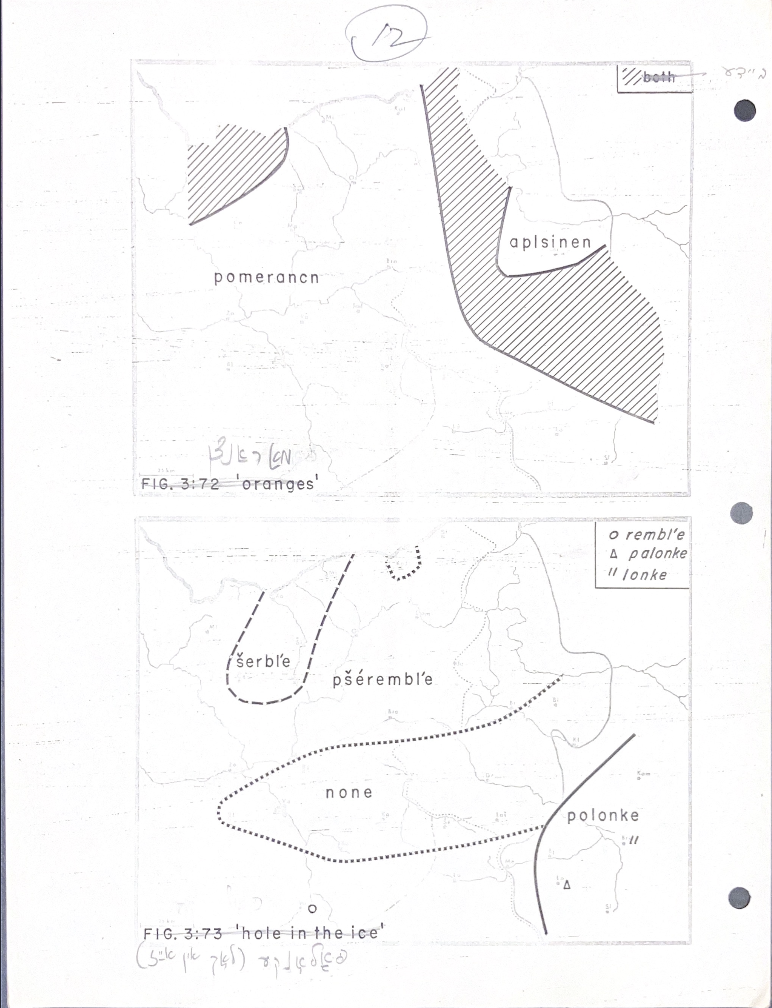
Beyond the hours I have spent listening to interviews from the LCAAJ, I have spent significant time in the Rare Book and Manuscript Library at Columbia getting to know the documents that accompany the audio recordings. Of particular interest are the maps generated by the interviews which locate the dialectical variations across cities, towns, and shtetlekh. The transnational nature of Yiddish means that these measures of pronunciation by geography cross borders and form islands within the broadly construed linguistic world of Eastern Europe. My particular favorite is a map which delineates the different words for orange (the fruit) across an undetermined area (the map doesn’t include labels). In one area, they say pomerantzn “פּאָמעראַנצן” and in another, aplsinen “אַפּלסינען.” Having only ever learned the word “פּאָמעראַנצן,” I was curious as to the linguistic makeup of “אַפּלסינען” and searched for it using a few online dictionaries and the Yiddish Book Center’s OCR. “אַפּלסינען” was only available in the Verterbukh, and came up with no entries in the OCR. The Comprehensive Yiddish-English dictionary similarly had no entries, so I turned to Der Oytser Fun Der Yidisher Shprakh in order to find an instance of this unfamiliar word. I found no trace of “alpsinen” in the cooking, baking, food, or orange (color) subsections of Der Oytser. My search for the background and etymology of this alternative name is ongoing.
I was also curious to see the administrative documents held in the archive, which reveal the unique backstory of the project. Under the direction of Mikhl Herzog, the LCAAJ was brought to life at Columbia University with collaboration from scholars around the world. The most moving part of the archive, I found, were the letters of support written to the Columbia librarians to voice support for the archive being permanently housed in the Columbia libraries. These letters emphasize the broad impact that the LCAAJ has had on the field of Yiddish studies in the form of ethnographic, linguistic, and historical data collection. Reading the letters, it is hard to overstate the importance of the LCAAJ and the privilege of attending the university where it is housed. I, like the many scholars from decades ago, recognize the critical importance of the LCAAJ to modern projects of preserving the Yiddish language. It has been a vital resource for me and my classmates in the Advanced class as we continue to better our spoken Yiddish and better understand the historical contexts of the language.
דער שפּראַך און קולטור אַרכיװ פֿועם אַשכּנזישן ייִדענטום איז די װיכטיקסטע און נישט־געניצטע רעסורס דאָ אין קאָלומביאַ בײַ סטודענטן און אַקאַדעמיקערס אַרום דער װעלט. כ׳האָב אויסגעקליבן זיך צו הערן צו רעקאָרדירונגען פֿון לעמבערג, װאָס הײַנט הייסט לװיװ, אוקראַיִנע. מיט אַזאַ ברייטקײַט אינעם אינטערװיוען, איך בין פֿאַרגעקאָכט אין צוהערן צו אַ ייִדיש פֿון װאַנען די משפּחה שטאַמט, מיט דורות צוריק.
דער פֿרעגבויגן װאָס פֿירט די אינטערװיוען גייט לויט אַ פֿאָרמולאַ כּדי פּראָדוצירן ענטפֿערס פֿון אַרום מיזרח־אייראָפּע. די װאָס איִך האָב צוגעהערט צו זײַנען נישט געװען אַזוי באַזונדערש פֿון די פֿראַגעס, און סרובֿ פֿון די רעקאָרדירונגען פֿאַרנעמט זיך מיט די קלײַנע אַנדערשקײַטן אין אַרויסזאָג צוליב געאָגראַפֿיע. די פֿרוי פֿון לעמבערג האָט אויסגעזאָגט ״בלוי״ מער װי ״בלאָ־ע״ להיפּוך די קלאַל־שפּראַך ״בלוי,״ און ״דאָנטיסט״ אָנשטאָט ״ציינדאָקטער.״ כ׳בין געװען מערסטנס פֿאַרינטערעסירט מיט אינטעריעקציעס פֿון דער סוביעקט װעגן סינאָנימען פֿאַר די ענגליש װערטער “to stutter or stammer.” זי באַמערקט אַז מענטשן אין איר געגנט האָבן געניצט די ביידע װאַריאַציעס, אָװער איינער איז געװען ״מער ייִדישלעך.״ נאָך זוכן אין װערטערבוך, איך האָב באַמערקט אַז ״היקען זיך״ און ״סטענקען״ זיך האָבן נאָר קלײַן אַנדערשקײַטן אין טײַטש, ״היקן זיך״ װי “to stutter or stammer” און ״סטענקען״ װי “to grumble.” ״חיקן זיך,״ זאָגט די סוביעקט, איז ״מער ייִדישלעך,״ אַפֿילו טײַטשן זײַ דעם זעלבע אין איר געגנט. ס׳איז קוקװינקלען װי אירע װאָס בויען אַ פֿענסטער אויף דער װעלט לינװיסטיק פֿון די סוביעקטן, װאָס מיר קענען נישט פֿאָרשן פּערזענלעך הײַנט.
די מאַפּע װאָס איז ספּעציפֿיש אינטערעסאַנט איז די װאָס װײַזט די פֿאַרשידענע װערטער פֿאַרן פֿרוכט ״פּאָמעראַנצ״ אין פֿאַרשידענע ערטער. אין אײַן געגנט, רופֿט מען די־אָ פֿרוכט אַזוי, ״פּאָמעראַנצ,״ און אין אַן אַנדערע, ״אַפּלסין.״ איך האָב נאָר זיך געלערנט ״פּאָמעראַנצ,״ און איך בין געװען נײַגעריק װעגן דער לינגװיסטיק אָפּשטאַם פֿון ״אַפּלסין.״ איך האָב געזוכט אין אַ פּאָר װערטערביכער אויף דער אינטערנעץ און אונעם OCR פֿונעם ייִדישע ביכער צענטראַל. איך האָב נאָר געפֿונען ״אַפּלסין״ אויף װערטערבוך, און איך האָב קײַן ענטפֿער געפֿונען אין OCR. דער כּוללדיק ייִדיש־ענגליש װערטערבוך האָט אויך נישט קײַן ענטפֿער, און צוליב דעם האָב איך געזוכט אינעם אוצר פֿון דער ייִדישער שפּראַך כּדי צו זוכן דאָס פֿרעמדע װאָרט. איך האָב נאָך אַ מאָל גאָרנישט געפֿונען װעגן ״אַפּלסינען״ אין די גרופּעס פֿון קאָכן, באַקן, עסן, אָדער אָראַנדז (דער קאָליר) אין דער אוצר. מײַן זוך פֿאַרן עטעמאָלאָגיע און הינטערגרונד פֿון דאָס װאָרט גײַט װייטער.
איך בין אויך געװען נײַגעריק צו זען די אַדמיניסטראַטיװער דאָקומענטן װאָס בלײַבן אין אַרכיװ, װאָס דערציילן אַ ספּעציעלע מעשׂה פֿונעם פּראָײַעקט. אונטער דער האַנט פֿון מיכל הערזאָג, דער שפּראַך און קולטור אַרכיװ פֿונעם אַשכּנזישע ייִדענטום איז געגרינדעט געװאָרן אין קאָלומביאַ אוניװערסיטעט, מיט הילף פֿון אַקאַדעמיקערס אַרום דער װעלט. װאָס איז געװען מערסטנס רירנדיק בײַ מיר איז די קאָרעספּאָנדענץ װאָס באַשטיצט די אַרכיװ אַז זי זאָל בלײַבן אין קאָלומביאַ נאָך דער פּראָיעקט האָט געענדיקט. די קאָרעספּאָנדענץ שטרײַכט אונטער דער אימפּאַקט פֿונעם אַרכיװ אויף דעם פֿעלד פֿון ייִדישע לימודים, אין עטנאָגראַפֿישע, לינגװיסטיק, און געשיכטע פֿאָרשונג. לײַענען די קאָרעספּאָנדענץ, ס׳איז שװער צו זאָגן צופֿיל װעגן די װיכטיקײַט פֿונעם אַרכיװ און די פּריװילעגיע זיך צו לערנען אין דער־אָ אוניװערסיטעט װוּ זי בלײַבט.
איך, װי די אַמאָליקע אַקאַדעמיקערס, פֿאַרשטיי די קריטיקאַל װיכטיקײַט פֿונעם שפּראַך און קולטור אַרכיװ פֿונעם אַשכּנזישע ייִדענטום אין מאָדערע פּראָיעקטן פֿון פּרעזערװירן דער ייִדישער שפּראַך. דער אַרכיװ איז אַ נייטיק רעסורס פֿאַר מיר און מײַנע מיטסטודענטן אין דער אַװאַנצירטע קלאַס, בעסערן אונדזער ייִדיש און זיך לערנען די געשיכטע דון דער שפּראַך.